There's a moment early in Shantaram where Lin sits in a Bombay slum and thinks he's never been more free. He's an escaped convict with a fake passport and a borrowed name. He has nothing. And he calls it freedom. I've heard this before. A lot. In my office, in barracks, in VA waiting rooms. The soldier who says he felt most alive during deployment. The addict who calls the first hit liberation. They're all describing the same thing: the relief that comes when you stop carrying the weight of who you used to be.
That's not freedom. That's a man who has confused losing everything with letting go. And those are very different things.
Everyone Reads This Book Wrong
People read Shantaram and see an adventure novel. A love story. A sweeping romance with Bombay. And it is all of those things on the surface.
But I'm a psychiatrist. I spent sixteen years listening to people's stories behind closed doors. I can't turn it off. And when I read Shantaram, I don't see adventure. I see a man displaying every symptom of complex PTSD: the hypervigilance, the identity disturbance, the emotional numbing. And I see him trying every wrong door before accidentally finding one that opens.
Running Is Not Healing
Lin doesn't just leave Australia. He leaves the hemisphere. New continent, new language, new name, new self. He builds an entirely different human being from scratch. And for a while, it works. That's the cruelest part.
In my practice, I call this the geographic cure: the belief that if you move far enough, the pain won't follow. I see it constantly in veterans. You leave the base, move to Montana, maybe leave the country entirely. You keep moving because movement feels like progress. And the moment you stop, you realize you packed the war right alongside your socks.
The geographic cure isn't a formal diagnosis, but it's recognized widely in clinical practice as a maladaptive coping strategy, particularly common in populations with high mobility: military personnel, first responders, and individuals fleeing their pasts. The temporary relief it provides often delays genuine trauma processing by years.
The initial relief is real. Your nervous system actually does calm down when you remove the triggers. You sleep better in a place where nothing reminds you of what happened. But trauma doesn't need a zip code. It lives in your body: your startle response, your amygdala, your inability to sit still in a quiet room. Lin crosses an ocean and his nervous system doesn't even notice.
Here's what's actually happening underneath the adventure: Lin doesn't want to die. He wants to have never been the person who did those things. Since he can't undo the past, he tries to un-become himself. He's not running toward India. He's running away from every version of himself that existed before India.
The problem is the self you're running from is the one doing the running.
The Soldier Who Won't Stand Down
There's something I see in veterans that most people don't have a name for. I call it operational identity. When you're deployed, you stop being a complicated person with doubts and fears and a messy inner life. You become a function. A role. A mission. And that narrowing, that simplification of self into pure purpose, is for a lot of service members the most psychologically comfortable they've ever felt.
Lin replicates this in Bombay without knowing he's doing it. He doesn't just find a city. He finds a series of missions. Linbaba the slum doctor. Lin the counterfeiter. Lin the soldier for Khader Khan. Every identity is an operation. Every operation is a reason not to sit still.
I've watched this play out in my office dozens of times. The vet who comes home and immediately starts three businesses, volunteers for everything, fills every waking hour. Not because they're ambitious. Because stillness is where the feelings live. Busyness is a form of body armor. And Lin's entire life in Bombay, all that beautiful, chaotic, dangerous adventure everyone loves reading about, is a man maintaining deployment-level operational tempo because slowing down would mean feeling everything he crossed an ocean to avoid.
When the Running Stops Working
The heroin subplot is where most readers check out. The adventure sags. The hero falls. It's uncomfortable.
It's also the most honest part of the book.
Here's what happens clinically. Lin's primary coping strategy (the geographic cure, the new identity, the constant motion) has a shelf life. Slowly, the cracks show. The relationships get complicated. The moral compromises pile up. The new identity starts feeling as hollow as the old one. And when your main defense mechanism fails, you don't just sit there. You escalate.
Lin doesn't start using heroin because he's weak. He starts because every other wall between him and his pain has crumbled and he needs one more. In my practice, I almost never see addiction start as recreation in trauma survivors. It starts as medication. The substance isn't the problem. The substance is the last remaining solution when everything else has stopped working.
A monk might achieve that silence through thirty years of meditation. An opioid achieves it in seven seconds. From the outside, the stillness looks similar. The cost could not be more different.The Story Shrink
What Roberts captures with uncomfortable precision is the specific quality of relief that opioids provide to someone whose nervous system has been running at combat-level alertness for years. It's not euphoria they're chasing. It's quiet. The first moment of genuine neurological silence since the original trauma.
Every veteran I've treated who developed a substance use problem tells me some version of the same sentence: "I just wanted it to be quiet in my head." Lin never says those words. He doesn't have to. Roberts wrote the feeling perfectly.
The Part Everyone Misses
Here's where the book does something I almost never see in fiction, and definitely never see done this accurately.
When Lin becomes the slum's unlicensed doctor, most readers see a heartwarming subplot. A criminal gives back. A fugitive finds redemption through service. Nice story.
I see something completely different.
In my work with veterans, I've noticed a pattern that contradicts what most therapy textbooks teach. The standard model says: first gain insight into your trauma, then change your behavior. Process the past, then build the future. It's clean and logical and for a lot of people it's completely backwards.
Some patients, especially ones with military backgrounds, cannot sit still with their pain. Their nervous systems won't allow it. They need a reason to stay in the present tense before they can examine the past tense. They need a mission first. A purpose. An answer to the unspoken question: why should I endure the pain of looking at what happened to me?
Sometimes you need a reason to stay alive before you can look at why you wanted to stop.The Story Shrink
I call this purpose before processing. And it's exactly what happens to Lin.
He doesn't decide to heal and then find purpose. He stumbles into purpose and discovers it creates the conditions for healing. People in the slum are sick. People are dying. He can help. The mission is clear, immediate, and morally clean. Possibly the first morally clean thing he's done since his criminal life began.
And something shifts.
When Lin is treating a wound or diagnosing a fever, he's fully present. No past. No identity crisis. No running. Just the person in front of him and the task at hand. That total absorption in the present moment — that's the same thing that made combat paradoxically calming for some veterans. The difference is that this version doesn't cost him his soul.
This pattern (meaningful action creating the conditions for psychological healing, rather than following from it) is called behavioral activation. The vet who can't sit through a therapy session but volunteers at a shelter and starts sleeping through the night isn't avoiding treatment. He's found a different entry point into it.
The Big Lie of the Beautiful Ending
Shantaram implies that Lin is healed. The narrative arc bends toward redemption. You close the book feeling like he's been fundamentally transformed by his experience in India.
I'm not sure I buy it.
What I see, clinically, is a man who has replaced one set of coping mechanisms with better ones. More adaptive, more prosocial, less self-destructive. But the underlying trauma hasn't been metabolized. It's been managed. He's built a beautiful structure on top of a foundation he never examined. In my experience, those structures eventually need repair.
But here's the thing — that's not a failure of the book. It might be its deepest truth.
Because real trauma recovery doesn't end. There is no final chapter. There is only the ongoing practice of showing up to yourself and choosing, again and again, not to run. You don't have to reach some perfect state of healing. You just have to stop mistaking motion for progress.
The Prescription
Shantaram is 936 pages of a man who discovers the fundamental truth about human suffering (that it exists, that it has causes, that it can be eased) and then spends nearly every page trying the wrong solution before stumbling into one that almost works.
He tries geography. Doesn't hold.
He tries reinvention. Cracks eventually.
He tries substances. Nearly kills him.
He tries purpose. And something finally gives.
Not everything. Not permanently. But enough. Enough to stop running. Enough to sit still for a moment. Enough to look at who he actually is and not immediately reach for a plane ticket or a needle or a new name.
That's not a cure. But from where I sit, across sixteen years of listening to people tell me their stories, it's a start. And starts are what I prescribe.

Read Shantaram with new eyes. See the psychiatric architecture underneath the adventure.
Affiliate link — supports The Story Shrink at no extra cost to you.
The Next Diagnosis Drops Tuesday
One book. One diagnosis. One insight you'll think about all week.
Free. Weekly. No spam. Just prose.
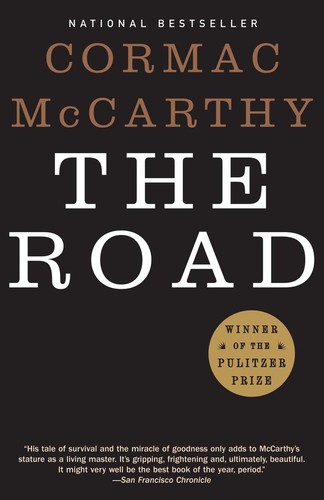
When Love Becomes the Last Symptom
McCarthy wrote the most accurate depiction of hypervigilance in literature — and disguised it as a father's love.
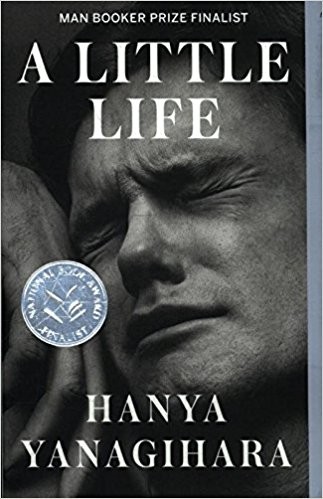
The Clinical Limits of Friendship as Therapy
A devastating study in whether love alone can heal complex trauma. The answer psychiatry gives is not the one readers want.